
Welcome to Our Website
The Jurd Family in Australia
A Living Connection Since 1788
The story of the Jurd family in Australia begins in the earliest years of European settlement and continues through many generations to the present day.
It is a story shaped by separation, survival, resilience, and belonging. It also unfolds within the broader history of a continent already inhabited by Aboriginal and Torres Strait Islander peoples whose connection to Country extends back tens of thousands of years. The arrival of Europeans brought profound and lasting consequences, many of which continue to be felt today.
Like many Australian families, the Jurd family story sits within this larger human story of movement, settlement, adaptation, loss, and continuity. Understanding our own history invites us to reflect not only on where we come from, but also on the wider histories and communities that have shaped the Australia we share.
This website offers an opportunity to explore lineage, memory, and belonging at a human pace. Some visitors arrive searching for names and dates; others come seeking stories, context, or a deeper understanding of where they come from. Here, across generations and distances, we gather to preserve and share the threads that connect us.
You are warmly welcome, wherever you may be.
Our family archive is held in a spirit of shared stewardship. Every effort has been made to honour the historical record while remaining respectful of the people and communities whose lives form part of this story.
We invite you to come closer.
We hope you will find something here that feels meaningful, familiar, and true.
A place where the past is held with integrity and care.
Welcome home.

Support Your Family
Jurd Website Membership
$20 one year
$50 three years
$120 lifetime
Choosing to support this website with your generous donation of Membership helps us care for the Jurd Australian family history, and keeps this important resource available for future generations.
Your donations and membership:
-
Helps cover the ongoing cost of maintaining the website
-
Allows login access to member-only records and family material not available to the general public
-
Supports the long-term care of research gathered over many years
Membership is simple, optional, and helps ensure the family archive remains available and secure.
First Fleet 1788
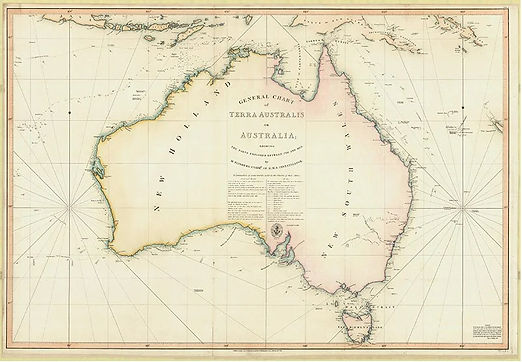
The arrival of the First Fleet in January 1788 marked the beginning of permanent European settlement in Australia. Eleven ships reached Sydney Cove after a long and difficult 8 month voyage from England, carrying convicts, marines, officers, and their families. The early colony faced extraordinary hardship and struggled with unfamiliar land, inadequate supplies, fragile shelters, and a constant struggle to grow food in an environment very different from Britain. Life in the first years was precarious. Rations were limited, crops often failed, and many people lived close to starvation. Disease and exhaustion were common. Survival depended on labour, cooperation, and gradual adaptation to the land and climate. It was within this fragile and uncertain context that the earliest foundations of many Australian families were laid, or ended. Among those who arrived with the First Fleet were William Douglass and Mary Groves. Their lives became part of the earliest chapter of colonial Australia, shaped by necessity rather than comfort, and by work rather than security. Like many in the young settlement, they were required to contribute practically to the survival of the colony through labour, trade, and service. William and Mary were married just four months after the Fleet’s arrival. Their marriage took place at Sydney Cove during a period when the settlement was still finding its footing. Housing was basic at best, food was scarce, and daily life demanded great resilience. The Second Fleet's arrival was a disaster, and it was not until the landing of the Third Fleet, nearly four years after January 1788, that provisions and tools from European culture arrived to make survival a little more likely. The early years of the settlement were also defined by profound injustice. European occupation occurred on Aboriginal land, and the arrival of the First Fleet initiated dispossession, violence, disease and catastrophic disruption for Indigenous peoples that continues to shape Australia today. Any account of British settlement must acknowledge that the foundations of the colony were built alongside immense loss and suffering for the original custodians of the land. This page situates the Jurd family story within that broader historical reality. It does not seek to celebrate colonisation, but to place family history honestly within the context in which it unfolded. The lives of William Douglass and Mary Groves were lived at the intersection of hardship, survival, and multiple layers of historical consequence. Their arrival as two of the 750 convicts aboard the First Fleet places them directly in the line of ancestors who connect to the generations of Australians that followed. Their marriage on the 1st of June 1788, was recorded as being held at St Phillips Church but was likely declared in the open air, as no permanent structure would be built in such a short time after landing at Sydney Cove. The wedding was perhaps simply under a large gumtree, near the banks of the vital freshwater source that sustained the early settlement. Flowing down to join the harbour where Circular Quay and the ferry wharves now stand, the Tank Stream was central to daily life in 1788. You can find a blunt reminder of this topography if you stand at the intersection of George and Bridge Streets, looking eastward to greet the rising sun, and quite easily sense where - and why - the street's namesake bridge was built. From those fragile beginnings would later emerge many thousands of descendants, whose lives extended far beyond the uncertainty of those early years. If you're in the Jurd family and aged in your fifties in 2025, you are likely part of the 7th (or 8th) generation to be born here in Australia.

Daniel Jurd 1802
Daniel Jurd arrived in New South Wales in 1802, near the beginning of the steady flow of convicts transported from Britain during the early decades of the colony. Like many transported men, Daniel came from London, a city already undergoing enormous social pressure at the turn of the nineteenth century. Poverty, overcrowding, and limited opportunity shaped daily life for working people, and the criminal justice system of the time imposed harsh penalties for relatively minor offences. Transportation to New South Wales was intended as punishment, but it was also a source of labour for a growing colony still struggling to sustain itself. Convicts were assigned work, often in physically demanding conditions, and their lives were closely regulated. For many, transportation also created the possibility — however uncertain — of rebuilding a life that might otherwise have remained constrained by circumstance. Daniel Jurd’s early years in the colony were shaped by this system. Like others in his position, he laboured under assignment before gradually gaining greater independence. Over time, convicts who demonstrated reliability could receive conditional freedoms, land, or employment opportunities, allowing them to establish themselves within the expanding settlement. Ten years after arriving in Sydney, it was within this environment that Daniel formed lasting family ties. On 28 September 1812, Daniel Jurd married Elizabeth Douglass, the daughter of First Fleet settlers William Douglass and Mary Groves. Their marriage took place at St Matthew’s Windsor, one of the colony’s earliest enduring stone churches. By this time, Windsor had become a centre of settlement along the Hawkesbury River, shaped by farming, trade, and the rhythms of river life. Daniel’s life became firmly anchored in the Hawkesbury district. Elizabeth's father William was part of the first 22 land grants in 1794, and she was well aware of both the agricultural productivity as well as the devastating floods. There was isolation, and hardship, but it also offered opportunity for those prepared to endure its challenges. Their union brought together two strands of early colonial experience: the First Fleet foundations and the later convict migrations that followed. Daniel and Elizabeth went on to raise a large family, establishing a lineage that extended across generations and travels from the Hawkesbury into regional New South Wales and beyond. Together they created something neither could have fully imagined on their wedding day in Windsor; a family whose branches would spread across Australia and endure for more than two centuries. Their lives were marked by the ordinary realities of their time. Work and family, hardship and joy, uncertainty and hope. Yet it is often through these seemingly ordinary experiences that the most enduring legacies are created. Every descendant of Daniel and Elizabeth forms part of that continuing story. The world they knew has long passed, but the connections they forged remain. Through their children, grandchildren, and the generations that followed, their lives continue to be remembered, not only as part of Australian history, but as part of a living family whose story is still being written today.

Nine Descendants
Daniel Jurd and Elizabeth Douglass married, raised their family, welcomed grandchildren and then eventually died and were buried on the land by the Hawkesbury River. Their nine children were all born into this region that was so central to the survival and growth of the early European colony, but there were other forces at play besides agricultural necessity. It was a landscape shaped by major and sometimes catastrophic flooding, unforgiving isolation, hard physical labour, and human competition for natural resources. In addition to the challenges of the land they farmed for a living, there is no doubt their lives were also shaped by conflict with the indigenous people who had been living there for thousands of years. Whether the Jurds were personally involved, or perhaps just part of a settler community that supported each other as a group in opposition to the aboriginal inhabitants, the finer details almost don't matter. The reality is that our Jurd family were there, on the river frontier, and would have experienced conflict in many forms, from daily subtle reminders to occasional extreme violence. There are three documented massacres on the Hawkesbury River in the first 20 years of settlement. No doubt many more have been left unreported, as the European outsiders attempted to find a secure and new place to call home. Now, as modern Australians, we can perhaps barely comprehend the meaning of a "hard life" as it was for our early convict ancestors. The challenges were many, and the solutions taken at the time were sometimes poorly considered or made from ill-founded desperation. Life along the river demanded blind resilience and a survivor's adaptability, in acceptance of harsh realities and the limitations of the world as they knew it at the time. Qualities that would mark the family across generations. The children of Daniel and Elizabeth are: John Henry Jurd (1814–1904) James Jurd (1815–1891) Richard Jurd (1817–1856) Mary Ann Jurd (1822–1903) Elizabeth Jurd (1823–1856) Sarah Jurd (1826–1910) William Jurd (1829–1856) Joseph Jurd (1833–1907) Together, these nine children represent a full generation born into the realities of early colonial Australia. Their childhoods unfolded in a period when settlement was still precarious, transport was limited, and communities relied heavily on family labour and local networks. Education was uneven, medical care rudimentary, and life expectancy uncertain, particularly in the face of disease and accident. Some of the Jurd children lived long lives, raising large families of their own and witnessing the transformation of New South Wales from a struggling colony into a more established society. Others died younger, reflecting the risks and fragility of life in the nineteenth century. Collectively, their lives trace the gradual movement of the Jurd family outward from the Hawkesbury as later generations sought land, work, and opportunity elsewhere. Some remained in the valley around St Albans for several generations, while others moved north as the edge of the settler colony expanded through the Hunter Valley and up into areas as far as Moree, Inverell, and beyond into Queensland. Each of these nine children forms the beginning of a distinct family branch. This website is organised around those branches, allowing each line of descent to be explored in its own right. The stories that follow are not uniform or complete. Records vary, memories fade, and some lives are better documented than others. What remains constant is the shared starting point: a family raised along the Hawkesbury, carrying forward a lineage that continues to connect descendants across generations.

Recent Reunions
In more recent decades, the Jurd family story has been strengthened not only through research and records, but through gatherings that brought descendants together in person. These reunions have played an important role in renewing connection across branches and generations, and in sustaining the shared work of documenting family history. The first major Jurd family reunion was held in Windsor in 1998, made possible through the long and dedicated efforts of Peter Stewart. Peter laboured for many years to trace descendants, make contact across family lines, and bring people together at the place where so much of the family story began. That first gathering marked a significant moment of reconnection for a widely dispersed family. It was a sad but very common fact that the shame of convict heritage left many people's ancestry unspoken of, for many decades. At the reunions, several Jurd family members remarked that it was only in the last half of the 20th century, and then very hesitantly, that older generations began to share their knowledge passed down from grandparents and beyond. A larger reunion followed in 2002, marked by a formal service held at St Matthew’s Windsor, the church where Daniel Jurd and Elizabeth Douglass were married in 1812. This event commemorated 200 years since Daniel Jurd’s arrival in Australia, and coincided with the launch of the first major published family book. That volume listed the names of approximately 10,000 known descendants, representing many years of careful research and correspondence. In 2012, the family gathered once more in the Hawkesbury to mark 200 years since the marriage of Daniel Jurd and Elizabeth Douglass. By this time, Peter had traced 15,000 descendants and reunions had become a recognised way of affirming shared history, renewing personal connections, and acknowledging the collective effort required to maintain an accurate family record. Alongside these gatherings, Norma Jurd and Peter Stewart maintained a regular family newsletter for many years. The newsletter became a vital thread of communication, sharing updates, discoveries, and notices across the family network. Norma’s commitment to this work continued until her death in 2023, and her contribution is remembered with deep gratitude and respect. Today, Peter Stewart, together with Ian Jurd and Margaret Jurd, has welcomed Melissa Abraham and Jim Abraham to the team. The establishment of this website represents the next stage of that long-standing work, providing a secure, organised home for the extensive research already undertaken, and ensuring it can be cared for and added to by future generations. Membership helps support this ongoing stewardship. Annual membership is $20, or $50 for three years, and is required to access detailed family records within the members-only area of the site. Membership contributions assist with maintaining the website, preserving archival material, and keeping the Jurd family record available as a living resource for years to come.
Meet the Team
Founder
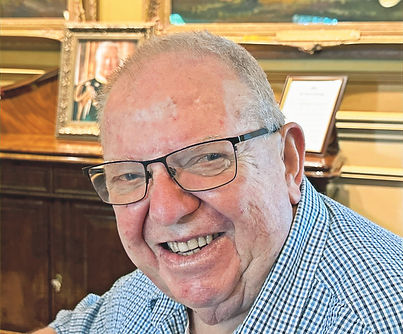
Peter Stewart
Since 1999, Jurd Association founder Peter has dedicated decades to preserving our shared family history. In 2026 he celebrates 60 years of service to faith, community and the Catholic Church.

Admin & Finance
Ian & Margaret Jurd
Add a short bio for each team member. Make it brief and informative to keep visitors engaged.
Website & Membership
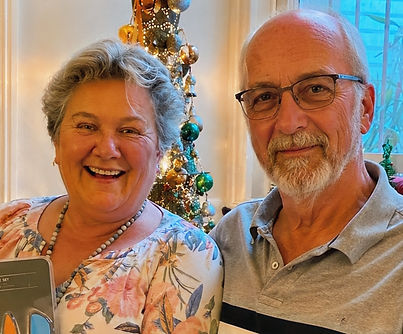
Melissa & Jim Abraham
Both music teachers and keen family historians, Melissa and Jim are delighted to be able to add some of their energy towards keeping the Jurd family archive going strong!
We Are Australian
Bruce Woodley & Dobe Bryant ~ 1987
I came from the dream-time
From the dusty red-soil plains
I am the ancient heart
The keeper of the flame
I stood upon the rocky shores
I watched the tall ships come
For forty thousand years I've been
The first Australian
I came upon the prison ship
Bowed down by iron chains
I fought the land, endured the lash
And waited for the rains
I'm a settler, I'm a farmer's wife
On a dry and barren run
A convict, then a free man
I became Australian
We are one,
but we are many
And from all the lands
on earth we come
We'll share a dream
and sing with one voice
"I am, you are,
we are Australian"
Contact
Questions? Give Melissa a call on 0429 400 100 or leave a message below